CBAM for Bosnia and Herzegovina's aluminium exporters.
Electricity and aluminium are Bosnia and Herzegovina's largest CBAM-covered export categories to the EU, which makes it one of the most exposed economies in the Western Balkans. Since 1 January 2026 CBAM has been running in its definitive regime — and the emissions-data request from your EU customer is no longer optional paperwork: Regulation (EU) 2023/956 defines exactly what they must declare.
Three reasons Bosnian exporters feel CBAM first.
Germanwatch's Eurostat-based analysis ranks Bosnia and Herzegovina among the most CBAM-affected countries in the region. The exposure is concentrated, and it is structural.
Aluminium and its listed precursors sit in Annex I of Regulation (EU) 2023/956, alongside a limited set of downstream products. Every tonne an EU customer imports carries embedded emissions that customer must declare.
The 50-tonne de-minimis introduced by Regulation (EU) 2025/2083 covers iron and steel, aluminium, fertilisers and cement — not electricity. Power sold into the EU is in scope regardless of volume.
With coal at roughly 70% of the generation mix (2020), carbon is built into Bosnian industry's cost story. Verified actual data lets your buyer avoid the marked-up default values — and that difference is negotiable value.
What changed when the definitive regime started.
The transitional period (1 October 2023 – 31 December 2025) was reporting only. Since 1 January 2026, only authorised CBAM declarants may import CBAM goods into the EU above the de-minimis threshold, the CBAM cost accrues on every tonne, and the first annual declaration — covering 2026 imports — is due on 30 September 2027. Certificate sales open on 1 February 2027 and apply to 2026 retroactively.
None of those obligations sits on the Bosnian producer. They sit on your EU customer, the authorised CBAM declarant. But Regulation (EU) 2023/956 determines what that customer must declare: installation-level embedded emissions for the goods you supplied. If you cannot provide them, the declarant may fall back on Commission default values under Implementing Regulation (EU) 2025/2621 — with a mark-up of 10% for 2026 imports, 20% for 2027 and 30% from 2028. Verified actual emissions carry no mark-up. That difference is now part of your price.
Habitat works on exactly this boundary across the region — including through our partnership with the Kosovo Chamber of Commerce on green transition and CBAM readiness (read the announcement).
From data request to verified response.
We take a Bosnian exporter from "our EU buyer sent a spreadsheet" to a dataset their declarant can actually use.
Bosnian export categories under CBAM.
| Export category | CBAM treatment since 1 January 2026 |
|---|---|
| Aluminium (incl. listed precursors and downstream items) | Annex I good. Declared by your EU customer; the 50 t per-importer de-minimis may exempt only very small buyers. |
| Electricity | Annex I good. No de-minimis — in scope regardless of volume. |
| Iron & steel, cement, fertilisers | Annex I goods where exported; the same declarant obligations apply. |
| Other manufactured goods | Outside current scope. A downstream extension covering mainly steel- and aluminium-intensive products is proposed from 2028 — under negotiation, not adopted. |
Scope per Regulation (EU) 2023/956 as amended by Regulation (EU) 2025/2083; export exposure per Germanwatch's Eurostat-based analysis (2023).
One dataset, every request.
The same activity data that answers a CBAM request also feeds your corporate footprint, EcoVadis evidence and bank ESG questionnaires. Collect it once, at installation level, and reuse it.
Habitat's consultants build the emissions file; Karbon360° keeps it live — so the next request is an export, not a project.
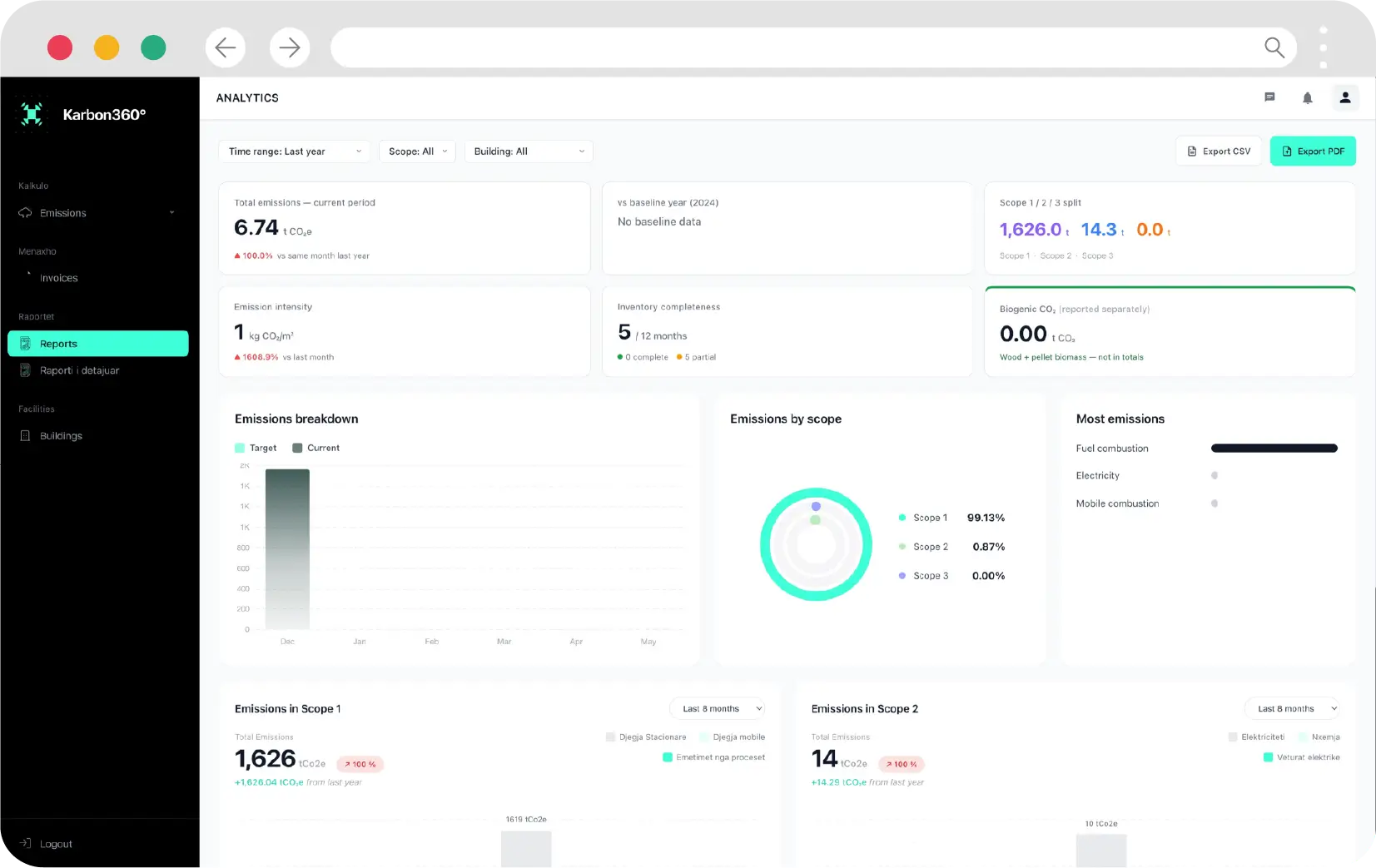
Karbon360°
Karbon360° transforms energy and business activity data into structured, GHG Protocol-aligned greenhouse-gas inventories and CBAM-ready installation data — with country-specific emission factors, Bosnia and Herzegovina included.
Certificate sales open 1 February 2027, covering 2026 imports retroactively. The first annual CBAM declaration — for 2026 imports — is due 30 September 2027. The Q1 2026 certificate price basis, published 7 April 2026, was EUR 75.36. Your EU customers are provisioning that cost now, and asking suppliers for data accordingly.
Frequently asked.
Does CBAM apply to aluminium exporters in Bosnia and Herzegovina?
What data will my EU customer ask for?
What happens if we don't provide emissions data?
Is there an exemption for small shipments?
Does Habitat provide CBAM training for exporters in Bosnia and Herzegovina?
Answer the next CBAM request with verified numbers.
Tell us what you export and who buys it. We map your Annex I exposure, build the installation dataset and keep your declarants supplied — with a fixed-fee quote within 48 hours.