CBAM compliance services for EU importers.
Since 1 January 2026 the Carbon Border Adjustment Mechanism has been running in its definitive regime: only authorised CBAM declarants may import CBAM goods above the de-minimis threshold, certificate sales open on 1 February 2027, and the first annual declaration is due 30 September 2027. Habitat's CBAM compliance services carry importers through the whole cycle — authorisation, supplier data, declaration and certificates. New to the mechanism? Start with what CBAM is under the definitive regime.
What the definitive regime asks of importers.
Three obligations sit on the EU importer — the authorised CBAM declarant — under Regulation (EU) 2023/956, covering cement, iron and steel, aluminium, fertilisers, electricity and hydrogen.
Only authorised CBAM declarants may import CBAM goods above the de-minimis threshold. Applications run through the Authorisation Management Module of the CBAM Registry, under the conditions of Implementing Regulation (EU) 2025/486.
The quarterly reports of the transitional period are gone. The definitive regime asks for a single annual CBAM declaration covering the previous year's imports and their embedded emissions — the first one covers 2026.
Certificates are priced from EU ETS auction averages. Sales start on 1 February 2027 and cover the 2026 import year retroactively — so the 2026 cost accrues now and belongs in your provisions.
The transitional period (1 October 2023 – 31 December 2025) is over. What remains is a legal cycle that repeats every year — authorisation kept current, data collected, declaration filed, certificates surrendered — under Regulation (EU) 2023/956 as amended by Regulation (EU) 2025/2083.
CBAM consulting across the whole compliance cycle.
One team for the legal, data and financial sides of CBAM. Every engagement is scoped in writing — scope, timeline and price — with a fixed-fee quote within 48 hours.
Most engagements start with the exposure check: a review of what you import, from which installations, and what the mechanism will cost you under the default-value route versus actual supplier data.
The dates that govern your 2026 imports.
| Date | What happens | Who acts |
|---|---|---|
| 1 January 2026 | Definitive regime applies. Only authorised CBAM declarants may import CBAM goods above the de-minimis threshold. | Importer |
| 31 March 2026 | Transitional tolerance: importers who lodged their authorisation application by this date may keep importing while it is pending. | Importer |
| 1 February 2027 | Certificate sales open on the common central platform, covering the 2026 import year retroactively. | Declarant |
| 30 September 2027 | First annual CBAM declaration due, covering 2026 imports. Certificates for 2026 must be surrendered by the same date. | Declarant |
Deadlines under Regulation (EU) 2023/956 as amended by Regulation (EU) 2025/2083. The original 31 May declaration deadline no longer applies.
Default values or actual supplier data?
Under Regulation (EU) 2025/2083 a declarant may use Commission default values instead of actual verified emissions. The convenience has a price: default values used in place of actual data carry a mark-up — 10% for 2026 imports, 20% for 2027 and 30% from 2028, set per good and per country by Implementing Regulation (EU) 2025/2621. Actual, verified emissions carry no mark-up.
That turns supplier data into a financial decision, not an administrative one. We run the request through your suppliers using the Commission's communication template for installations and the CBAM Registry's operator module, and we check how the embedded emissions were calculated before anything reaches your declaration. If you want CBAM compliance software rather than spreadsheets, Karbon360° keeps the figures structured and auditable.
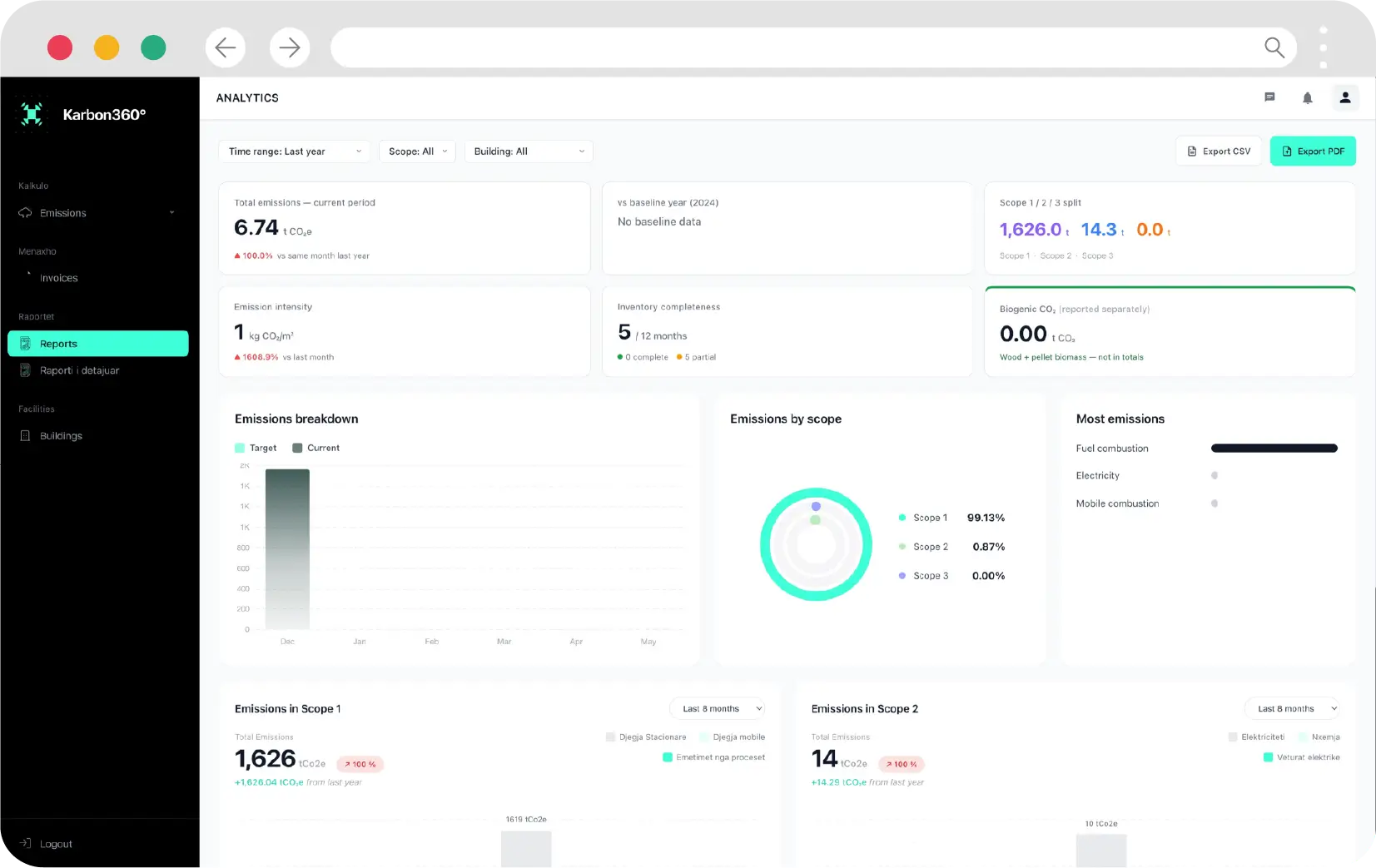
Karbon360°
Karbon360° transforms energy and business activity data into structured greenhouse-gas inventories and CBAM-ready data packs — supplier figures, default-value comparisons and the audit trail behind your declaration, in one place.
The base penalty for failing to surrender certificates is aligned with the EU ETS excess-emissions penalty — EUR 100 per tonne of CO2e, indexed to inflation. Importing CBAM goods without authorised-declarant status raises that to three to five times the standard penalty, and paying a penalty does not remove the obligation to surrender the outstanding certificates (Article 26, Regulation (EU) 2023/956).
Frequently asked.
What do CBAM compliance services include?
When is the first CBAM annual declaration due?
Do we need to buy CBAM certificates during 2026?
Can we use default values instead of asking suppliers for data?
Does the 50-tonne exemption apply to our imports?
How much does CBAM consulting cost?
Make your first CBAM year defensible.
Tell us what you import and from where. We come back within 48 hours with a scoped plan — authorisation, data, declaration and certificates — and a fixed-fee quote in writing.